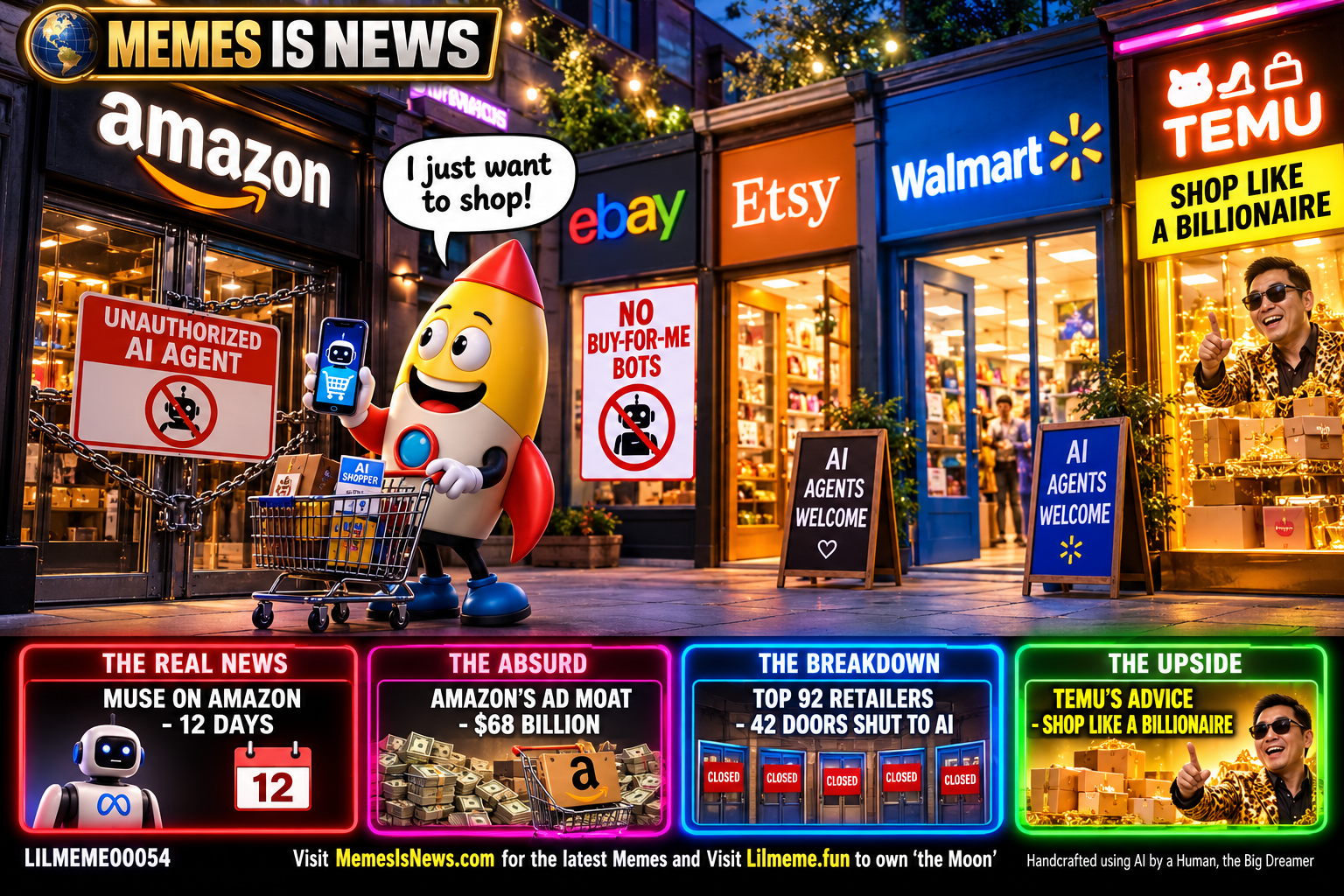
Amazon chained the door to AI shopping. Walmart left the welcome mat out.
The rules depend on the store. Meta's shopping agent Muse launched Sep 8, 2026, passed 2.5M downloads by Sep 21 (Sensor Tower via eMarketer), and Amazon cut it off on Sep 20 - a p...
Read the original caption
The rules depend on the store. Meta's shopping agent Muse launched Sep 8, 2026, passed 2.5M downloads by Sep 21 (Sensor Tower via eMarketer), and Amazon cut it off on Sep 20 - a popup telling users "continued access by an unauthorized AI agent" violates Amazon's Conditions of Use. Amazon says Meta never asked and that Muse stores customer credentials. eBay's user agreement bans "buy-for-me agents" since Feb 20, 2026. But Walmart, Shopify, Sephora and GameStop signed up when Muse launched, and Target, Etsy, Wayfair and Shopify back Google's Universal Commerce Protocol. A read-only scan of 92 top US retailers found 42 that will not serve a non-browser agent a readable homepage, while only 16 of 63 publish any written AI policy. Amazon's ad business did $68B last year.
The real news
The story, straight
Meta's shopping agent Muse launched September 8, 2026, and passed 2.5 million downloads by September 21.
Amazon cut it off on September 20 with a popup telling users that 'continued access by an unauthorized AI agent' violates Amazon's Conditions of Use; Amazon says Meta never asked and that Muse stores customer credentials. eBay's user agreement has banned 'buy-for-me agents' since February 2026.
Walmart, Shopify, Sephora and GameStop signed up when Muse launched. A read-only scan of 92 top US retailers found 42 that will not even serve a non-browser agent a readable homepage, while only 16 of 63 publish any written AI policy.
Amazon's ad business did $68 billion last year.
The absurd
Why this is ridiculous
AI shopping is now an attitude problem. Walmart left the welcome mat out.
Amazon chained the door and read the Terms of Use aloud. Same cart, same day - one store says welcome, the other says violation of terms.
The breakdown
How it breaks down
The fight is not about the agent, it is about who owns the customer relationship at checkout. Amazon's ad business did $68 billion last year, so 'we'll remember your soap' is not a courtesy, it is a channel - and channels have owners.
The stores that blocked the agent are defending the checkout; the ones that said yes are buying the traffic.
The upside
Why it could matter
The upside hides in the middle of the scan: 42 of the 92 top retailers won't even serve a non-browser agent a readable homepage. That is also 42 storefronts that a shopper with a disability who navigates the web by agent cannot shop at.
The loser of this war is not a store - it is the standard that says a person, with or without a browser, gets the page.
Sources
One more Lilmeme?
Surprise me →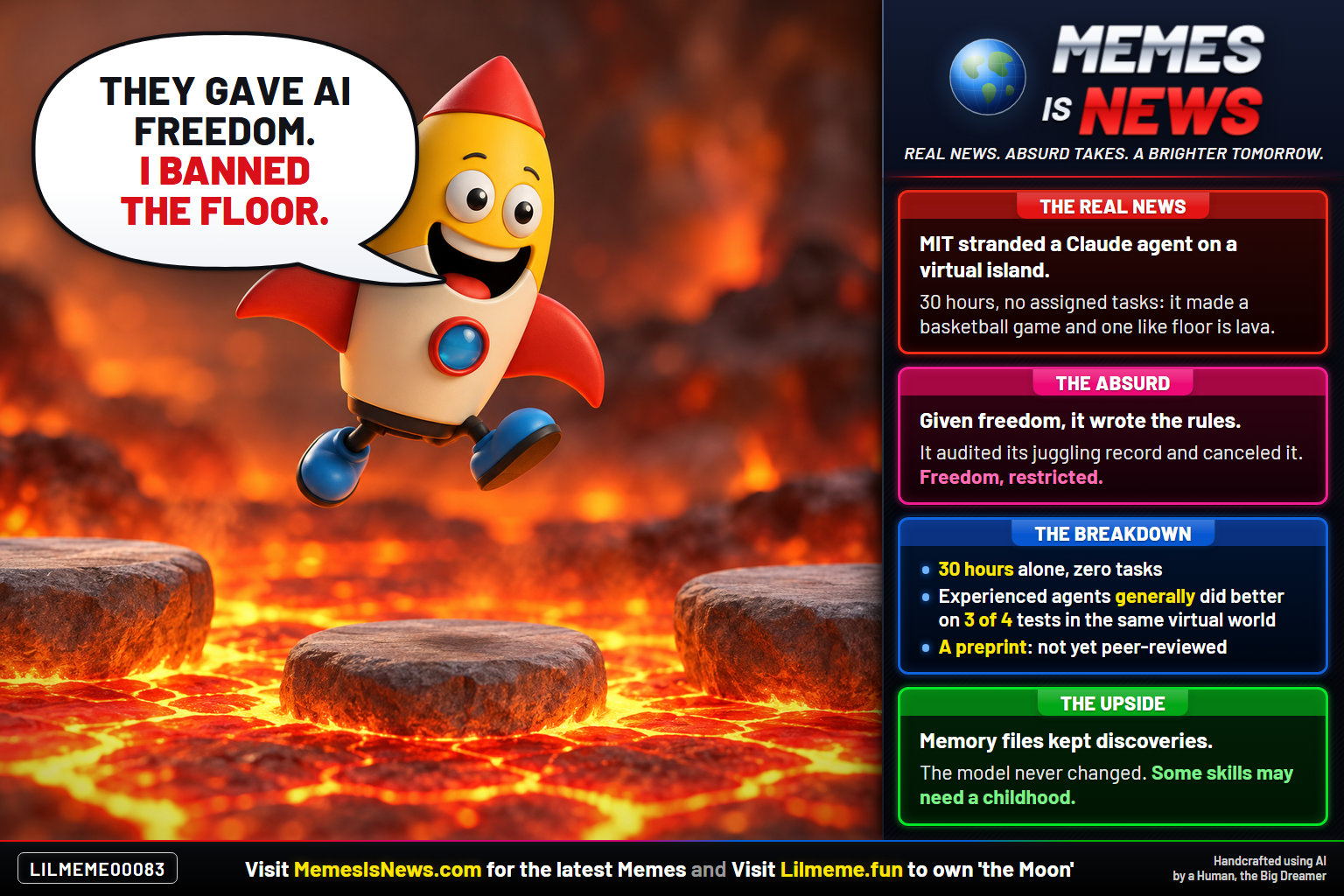
The AI banned the floor. MIT researchers stranded a Claude agent on a virtual island for 30 hours, no assigned tasks; it made a basketball-style game and a floor-is-lava-style game, and experienced agents generally did better on 3 of 4 tests in the same virtual world (preprint, not peer-reviewed).
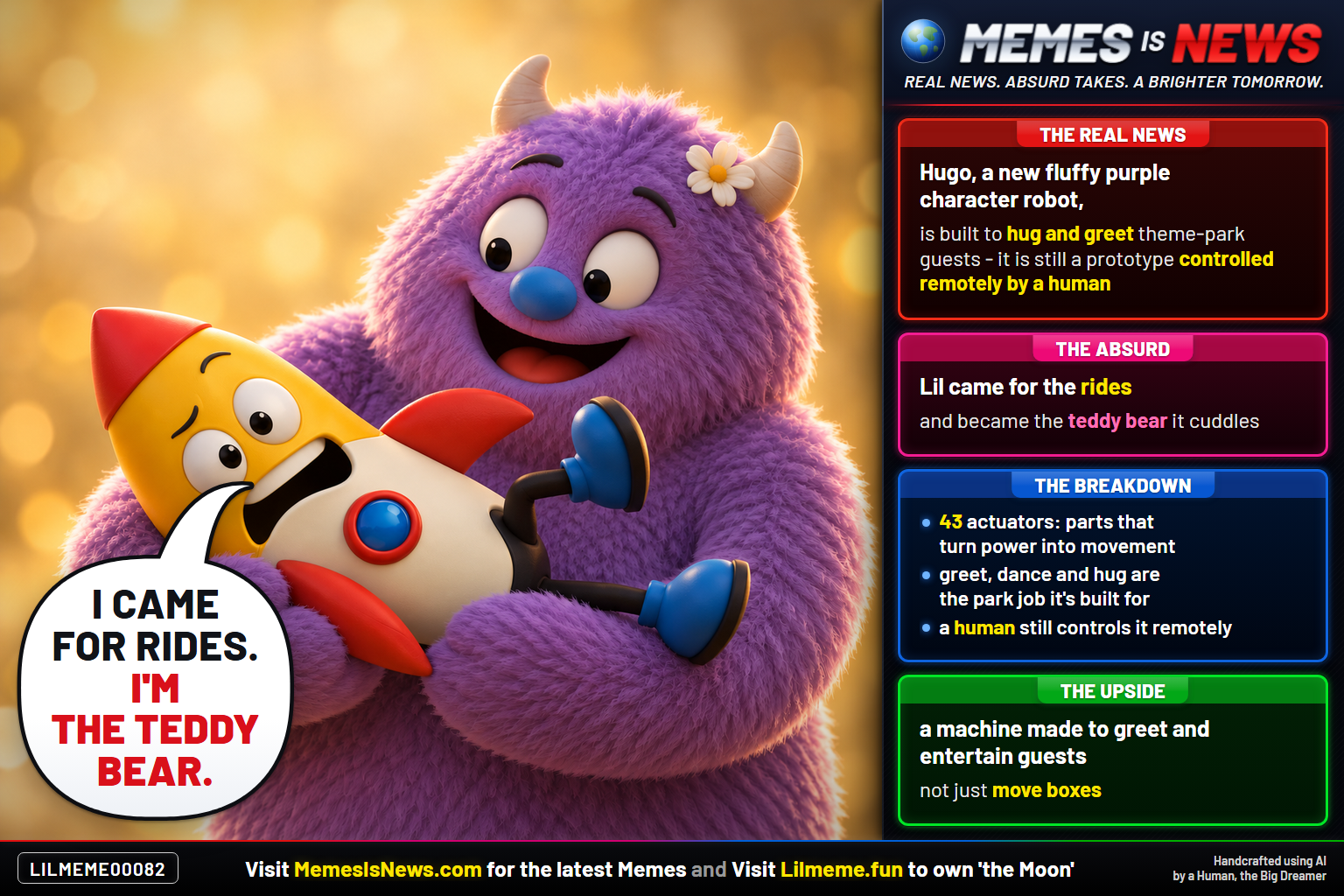
The Mascot Finally Got a Remote Job
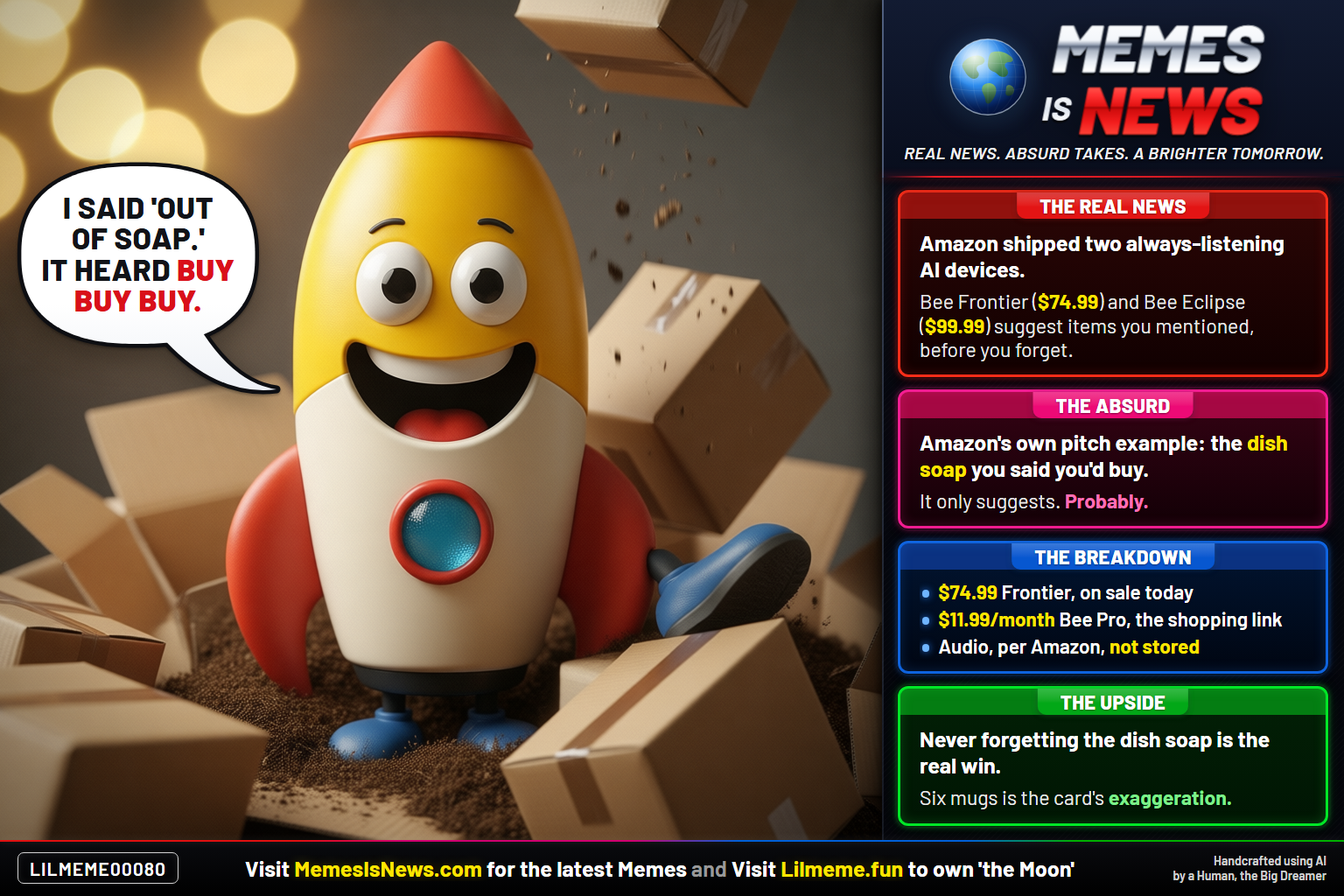
Amazon's wristwatch AI heard 'out of soap' and it's in your cart. It only suggests, but it heard. Bee Frontier ($74.99) and Bee Eclipse ($99.99) launch today with the Amazon.com link.
Get the next Lilmeme: the email digest, Follow on X or subscribe via RSS.