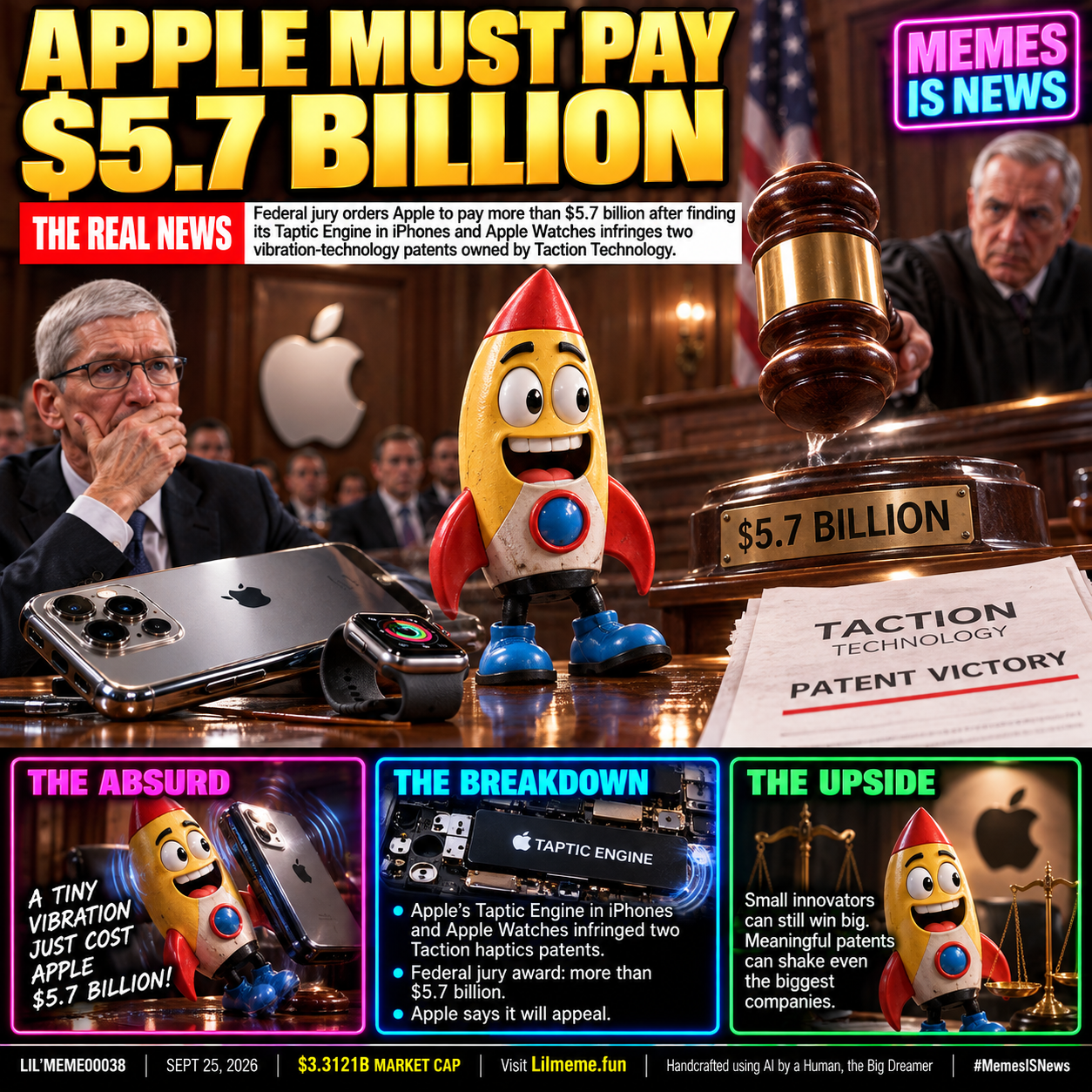
APPLE MUST PAY $5.7 BILLION
A federal jury in San Diego ordered Apple to pay more than $5.7 billion after finding that the Taptic Engine in iPhones and Apple Watches infringes two vibration-technology patent...
Read the original caption
A federal jury in San Diego ordered Apple to pay more than $5.7 billion after finding that the Taptic Engine in iPhones and Apple Watches infringes two vibration-technology patents (U.S. Patent Nos. 10,659,885 and 10,820,117) owned by Taction Technology. Taction sued in 2021; the case was dismissed in 2023 and revived by the Federal Circuit. The jury did not find willful infringement, and Apple says it will appeal: "Apple does not use Taction's technology."
The real news
The story, straight
A federal jury in San Diego ordered Apple to pay more than $5.7 billion after finding that the Taptic Engine in iPhones and Apple Watches infringes two vibration-technology patents (US Patent Nos. 10,659,885 and 10,820,117) owned by Taction Technology.
Taction sued in 2021; the case was dismissed in 2023 and revived by the Federal Circuit. The jury did not find willful infringement, and Apple says it will appeal: 'Apple does not use Taction's technology.'
The absurd
Why this is ridiculous
$5.7 billion. That's the price of a buzz.
The little wiggle that says 'message' just became the most expensive 'oh' in smartphone history. Apple's response: 'Apple does not use Taction's technology.'
The jury spent all week looking at a motor that wiggles and came back with a nine-figure verdict. One of you two is not describing the motor.
The breakdown
How it breaks down
The number to sit with: $5.7 billion against the whole iPhone and Apple Watch family is a per-device royalty that would dwarf much of a phone's bill of materials if paid per unit. That math turns a patent case into a business model for the plaintiff and an appeal into the defendant's only exit.
When a single feature is worth more than the product, the feature is the product.
The upside
Why it could matter
The upside is older than the lawsuit: a small patent holder with one real invention - a better buzz - just cashed a nine-figure exit from the largest company on earth.
In a market where everyone assumes only giants can win, the buzz-motor case is the counter-example of the week: one invention, held patiently, worth billions.
Sources
One more Lilmeme?
Surprise me →
The AI banned the floor. MIT researchers stranded a Claude agent on a virtual island for 30 hours, no assigned tasks; it made a basketball-style game and a floor-is-lava-style game, and experienced agents generally did better on 3 of 4 tests in the same virtual world (preprint, not peer-reviewed).
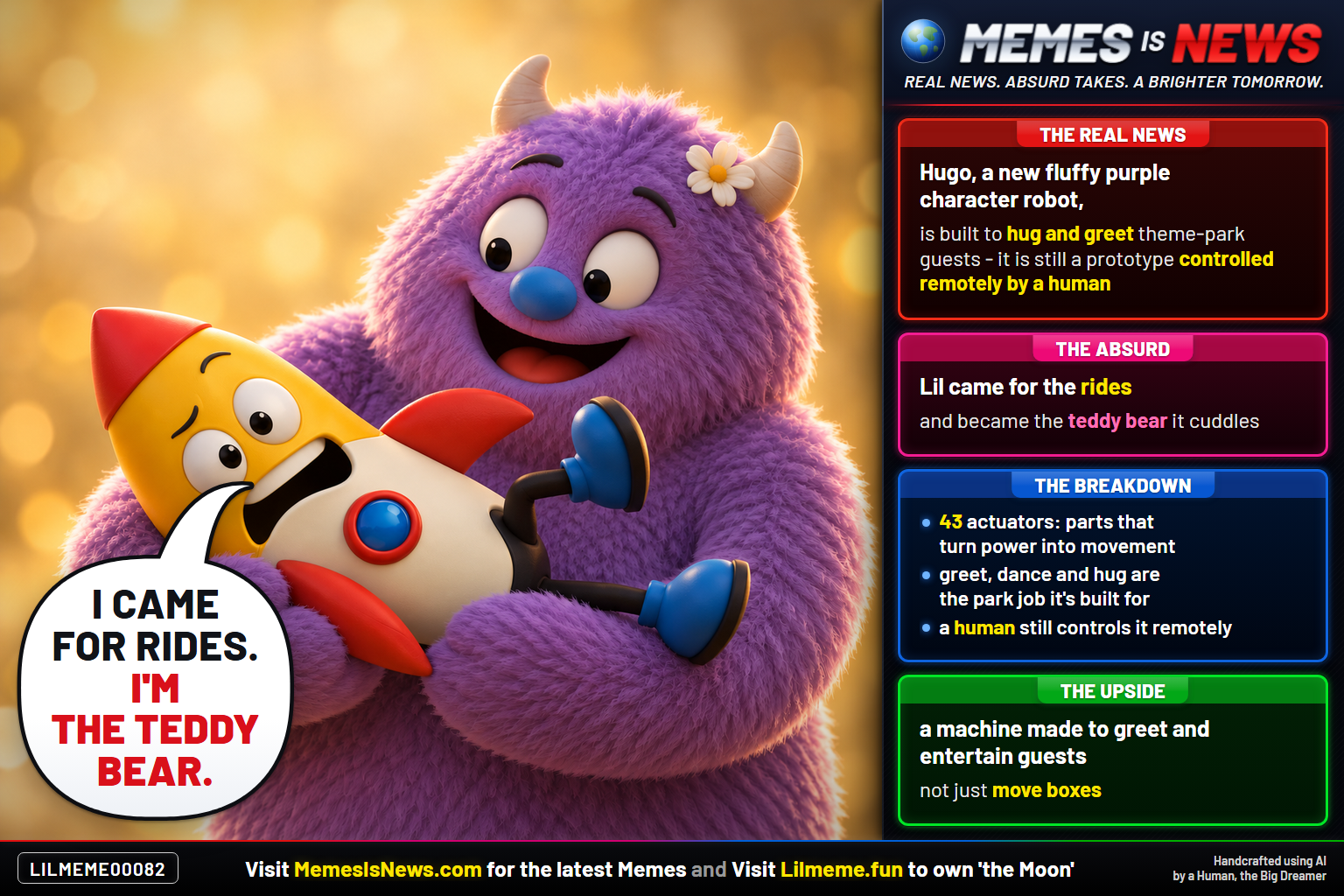
The Mascot Finally Got a Remote Job

Amazon's wristwatch AI heard 'out of soap' and it's in your cart. It only suggests, but it heard. Bee Frontier ($74.99) and Bee Eclipse ($99.99) launch today with the Amazon.com link.
Get the next Lilmeme: the email digest, Follow on X or subscribe via RSS.