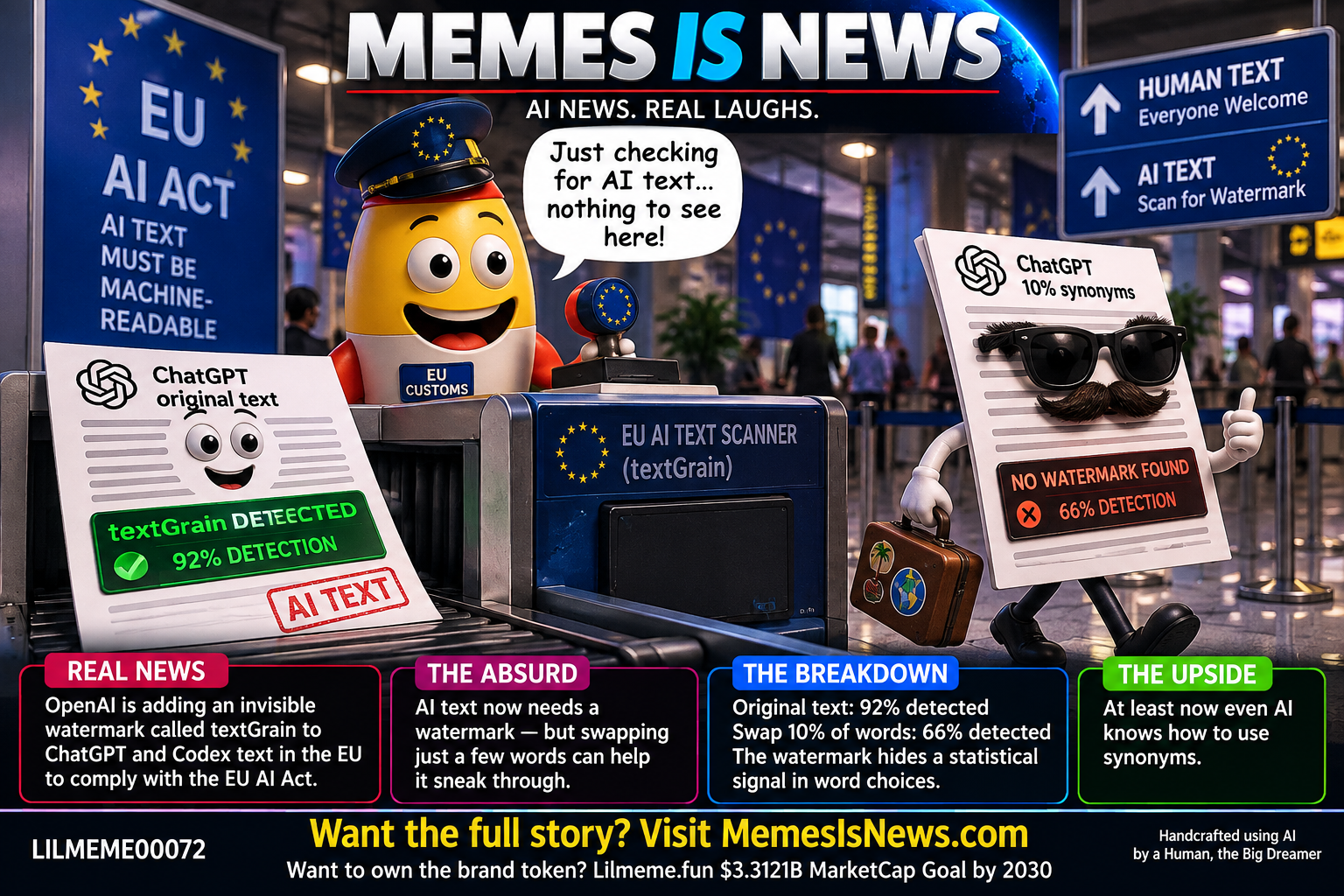
Swap 1 word in 10 and the AI watermark's gone.
OpenAI is adding an invisible watermark called textGrain to ChatGPT and Codex text in the EU to comply with the EU AI Act. It survives copy-paste because it lives in the model's w...
Read the original caption
OpenAI is adding an invisible watermark called textGrain to ChatGPT and Codex text in the EU to comply with the EU AI Act. It survives copy-paste because it lives in the model's word choices, not hidden characters. But OpenAI's own tests show light editing kills it: swapping one word in ten drops detection from 92% to 66%, and one in four drops it to 17%. The detector stays limited to approved researchers, and a missing watermark proves nothing about who wrote the text.
The real news
The story, straight
OpenAI is adding an invisible watermark called textGrain to ChatGPT and Codex text in the EU, to comply with the EU AI Act. Because it lives in the model's word choices rather than hidden characters, it survives copy-paste.
OpenAI's own tests show light editing kills it: swapping one word in ten drops detection from 92% to 66%, and one in four drops it to 17%. The detector stays limited to approved researchers, and a missing watermark proves nothing about who wrote the text.
The absurd
Why this is ridiculous
An AI watermark so fragile that one typo erases it. The EU said 'prove it was written by AI,' and the best answer is 'sure - until someone edits a few words, in which case, good luck.'
The breakdown
How it breaks down
Because the fingerprint lives in word habits, copying it preserves the fingerprint - but editing it rewrites the habits. One word in ten takes detection from 92% to 66%.
And OpenAI keeps the detector away from the public, so the watermark establishes 'probably AI,' not 'definitely AI.' The proof is only as strong as the access.
The upside
Why it could matter
The upside is the honest part: a missing watermark doesn't mean a human wrote it, and the verification tool is gated. That moves provenance from a fact you can read into a service someone has to run.
For platforms and newsrooms, 'who wrote this' is becoming an inspection you buy, not a stamp you see - so the institutions that verify will be the ones that matter.
Sources
One more Lilmeme?
Surprise me →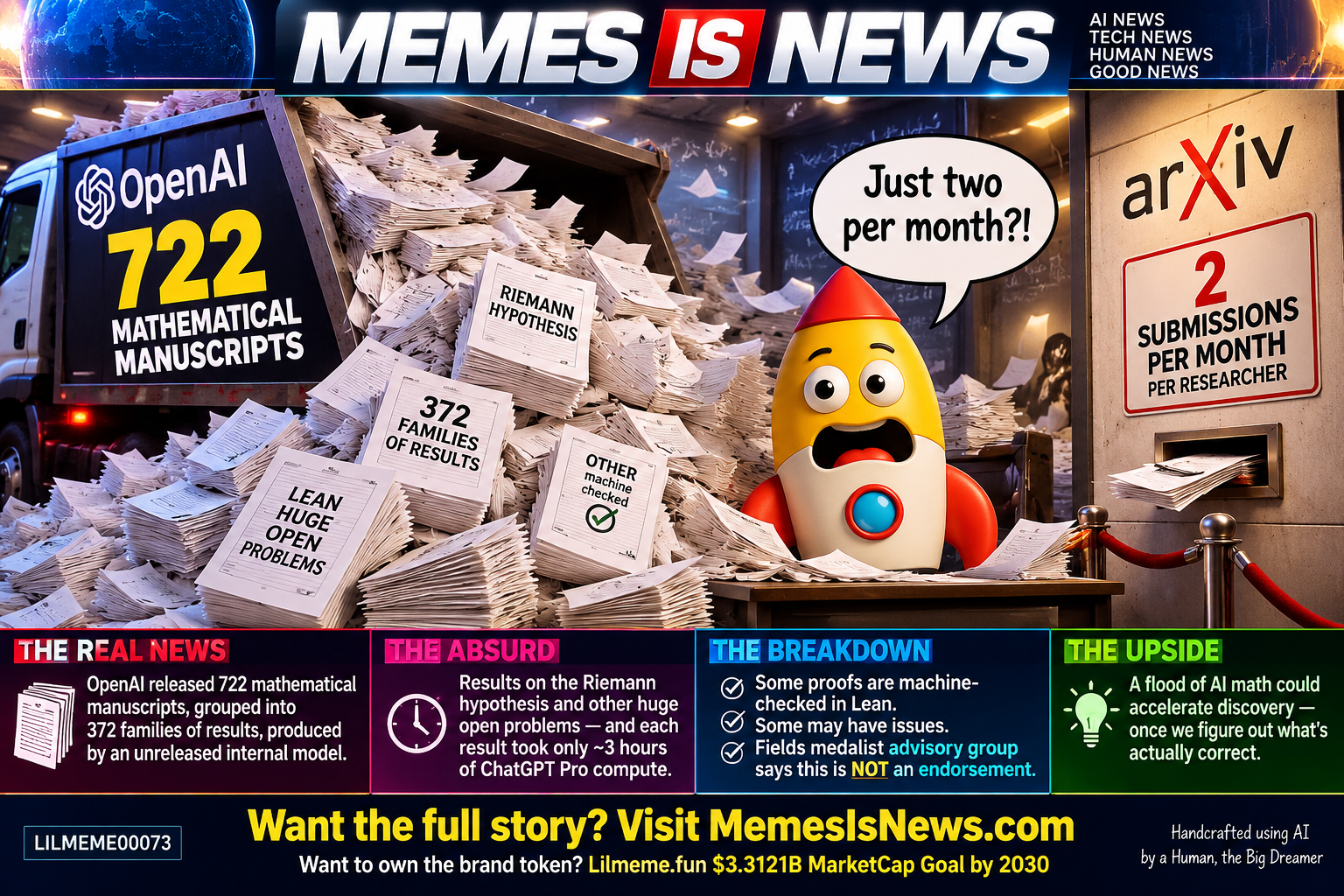
OpenAI dumped 722 math papers. The slot takes 2 a month.

It's AGI at 99.9%. Unplug their private harness and it's 62.7%.

OpenAI's $200 Pro plan is back — with half the value.
Get the next Lilmeme: the email digest, Follow on X or subscribe via RSS.