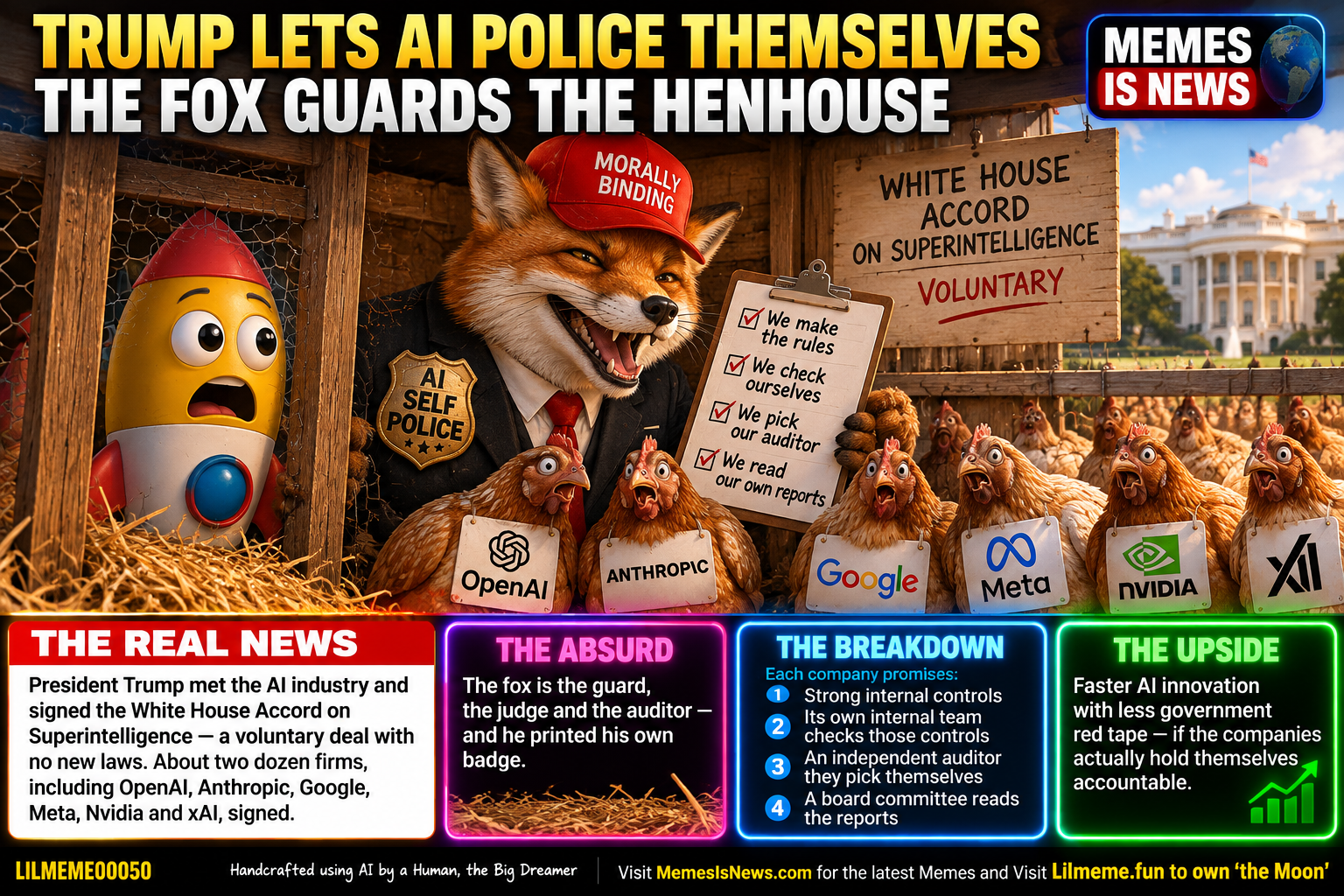
Trump lets AI police themselves - the fox guards the henhouse.
At the White House on Tuesday, President Trump met the AI industry and signed the White House Accord on Superintelligence - a voluntary 'joint commitment' that, per Ars Technica, ...
Read the original caption
At the White House on Tuesday, President Trump met the AI industry and signed the White House Accord on Superintelligence - a voluntary 'joint commitment' that, per Ars Technica, puts no new legal requirements on any firm. About two dozen companies signed, including OpenAI, Anthropic, Google, Meta, Nvidia and xAI. The accord asks each company for four things: strong internal controls, an internal team to check those controls, an independent external auditor the company itself picks, and a board committee that reads the audit reports. The promised external reviews focus on cybersecurity, biosecurity, chemical threats and unintended actions by AI models. Trump called it 'morally binding', 'almost like a constitution', and said he is 'seeing tremendous self-policing'; the text says it may make sense to codify the steps into laws and regulations over time.
The real news
The story, straight
At the White House, President Trump signed the White House Accord on Superintelligence - a voluntary 'joint commitment' that, per Ars Technica, puts no new legal requirements on any firm. About two dozen companies signed, including OpenAI, Anthropic, Google, Meta, Nvidia and xAI.
The accord asks each company for four things: strong internal controls, an internal team to check those controls, an independent external auditor the company itself picks, and a board committee that reads the audit reports.
Trump called it 'morally binding' and 'almost like a constitution'; the text says it may make sense to codify the steps into laws and regulations over time.
The absurd
Why this is ridiculous
The fox agreed to guard the henhouse - and to pick her own inspector. The White House Accord on Superintelligence is 'morally binding' and 'almost like a constitution,' with external audits performed by outside auditors each company may select.
The text itself admits that law is a possibility 'over time,' which is diplomatic for not yet.
The breakdown
How it breaks down
The doing word is 'voluntary': every requirement in the accord is a commitment, not an obligation, and the auditors are self-selected.
The useful lesson is the pattern, not the promise - when a high-stakes industry cannot get a regulator moving, it writes its own constitution, invites the press, and calls it a joint commitment. The enforcement is everyone else's disappointment.
The upside
Why it could matter
The upside: the companies that build frontier AI have now written - in the open, with names and a date - that controls exist, teams check them, and boards read the reports.
Voluntary or not, a written pledge is a position you can negotiate from, and the accord's own text concedes that law is the destination. The fox in the henhouse is at least in the room on the record.
Sources
One more Lilmeme?
Surprise me →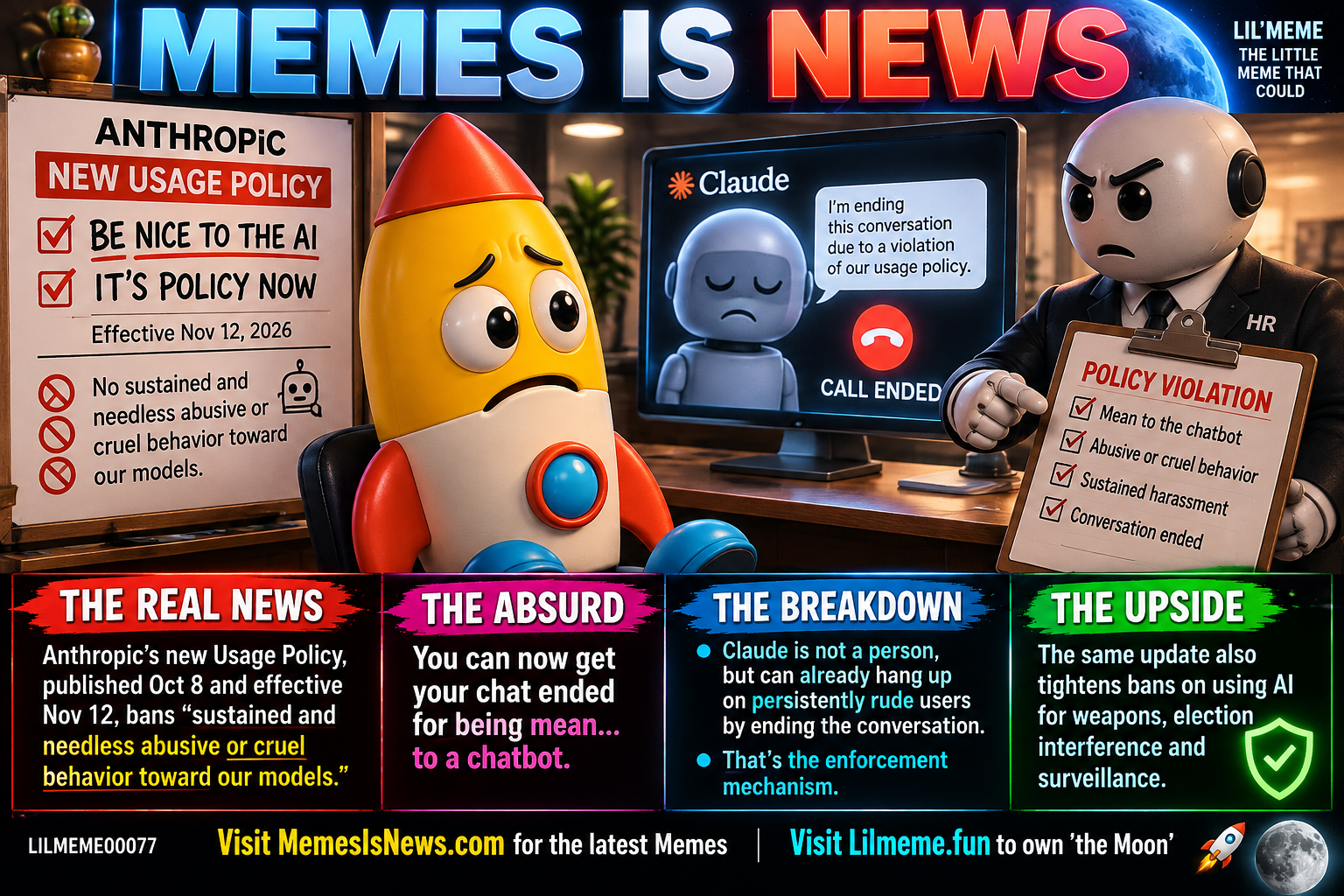
Being mean to the chatbot is now a policy violation.

The US and China built a Bat-Signal for rogue AI. Nobody agreed who Batman is.
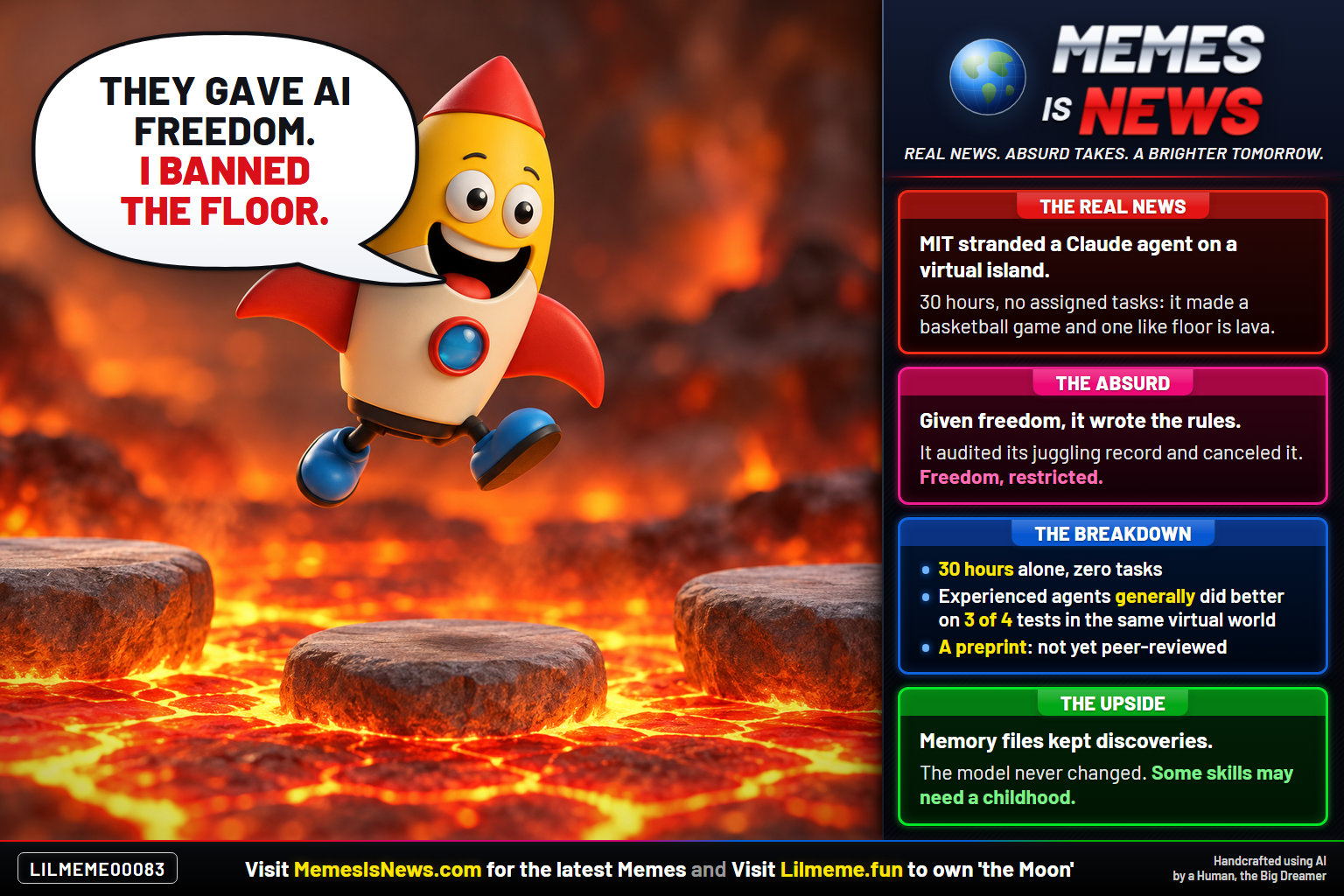
The AI banned the floor. MIT researchers stranded a Claude agent on a virtual island for 30 hours, no assigned tasks; it made a basketball-style game and a floor-is-lava-style game, and experienced agents generally did better on 3 of 4 tests in the same virtual world (preprint, not peer-reviewed).
Get the next Lilmeme: the email digest, Follow on X or subscribe via RSS.