CHINA TURNS DOCS INTO MOVIES
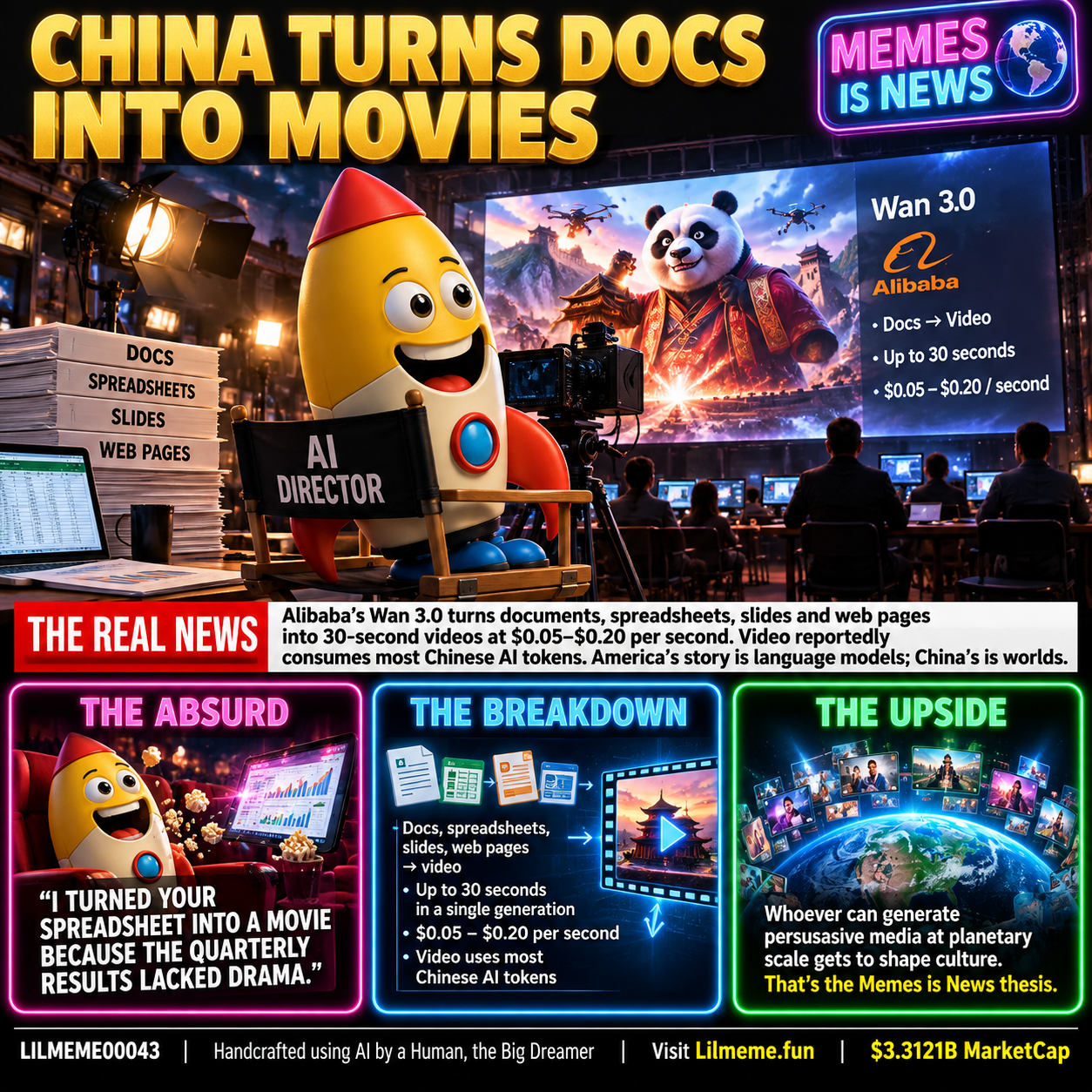
Alibaba's Wan 3.0, launched August 24, generates video from documents, spreadsheets, slides and web pages - up to 30 seconds in a single generation, priced at $0.05 to $0.20 per s...
Read the original caption
Alibaba's Wan 3.0, launched August 24, generates video from documents, spreadsheets, slides and web pages - up to 30 seconds in a single generation, priced at $0.05 to $0.20 per second. Alibaba announced the model after a $10 billion share sale. The Moonshots podcast frames China as world-model focused and globally distributable, with the claim - recorded here as a claim, not a fact - that video now consumes most Chinese AI tokens. World models predict scenes and physical states, not just words. The card's thesis: whoever can generate persuasive media at planetary scale gets to shape culture - that is the Memes is News spin Paul commissioned for this card.
The real news
The story, straight
Alibaba's Wan 3.0, launched August 24, generates video from documents, spreadsheets, slides and web pages - up to 30 seconds in a single generation, priced at $0.05 to $0.20 per second. Alibaba announced the model after a $10 billion share sale.
The pitch, as framed on the Moonshots podcast and recorded here as a claim rather than a fact: China's AI is world-model focused, with world models that predict scenes and physical states, not just words.
The absurd
Why this is ridiculous
Feed it a spreadsheet, get back a movie. Wan 3.0 reads your documents, your slides, your web page, and hands back 30 seconds of video at 5 to 20 cents a second.
The dullest input in the office is now the most interesting raw material, and 'deck to film' is a conversion rate, not a department.
The breakdown
How it breaks down
The keyword is 'world model': instead of predicting the next word, the model predicts the next scene - physical states that stay consistent across the clip. That is what lets a slide deck become coherent motion instead of frames.
Once document-to-video is a product, the unit of production stops being editing hours and starts being inputs - and the cost line is per second, down to a nickel.
The upside
Why it could matter
The upside is the price, and the price is the point: at 5 to 20 cents a second, a team that used to need a studio can cut a rough version for the cost of lunch.
The organizations that win will not be the ones with the biggest media budgets - they will be the ones that can turn the document on the desk into a 30-second film before the standup ends.
Sources
Alibaba launches Wan 3.0 AI video model after $10 billion share sale - Reuters (Aug 24 2026)
One more Lilmeme?
Surprise me →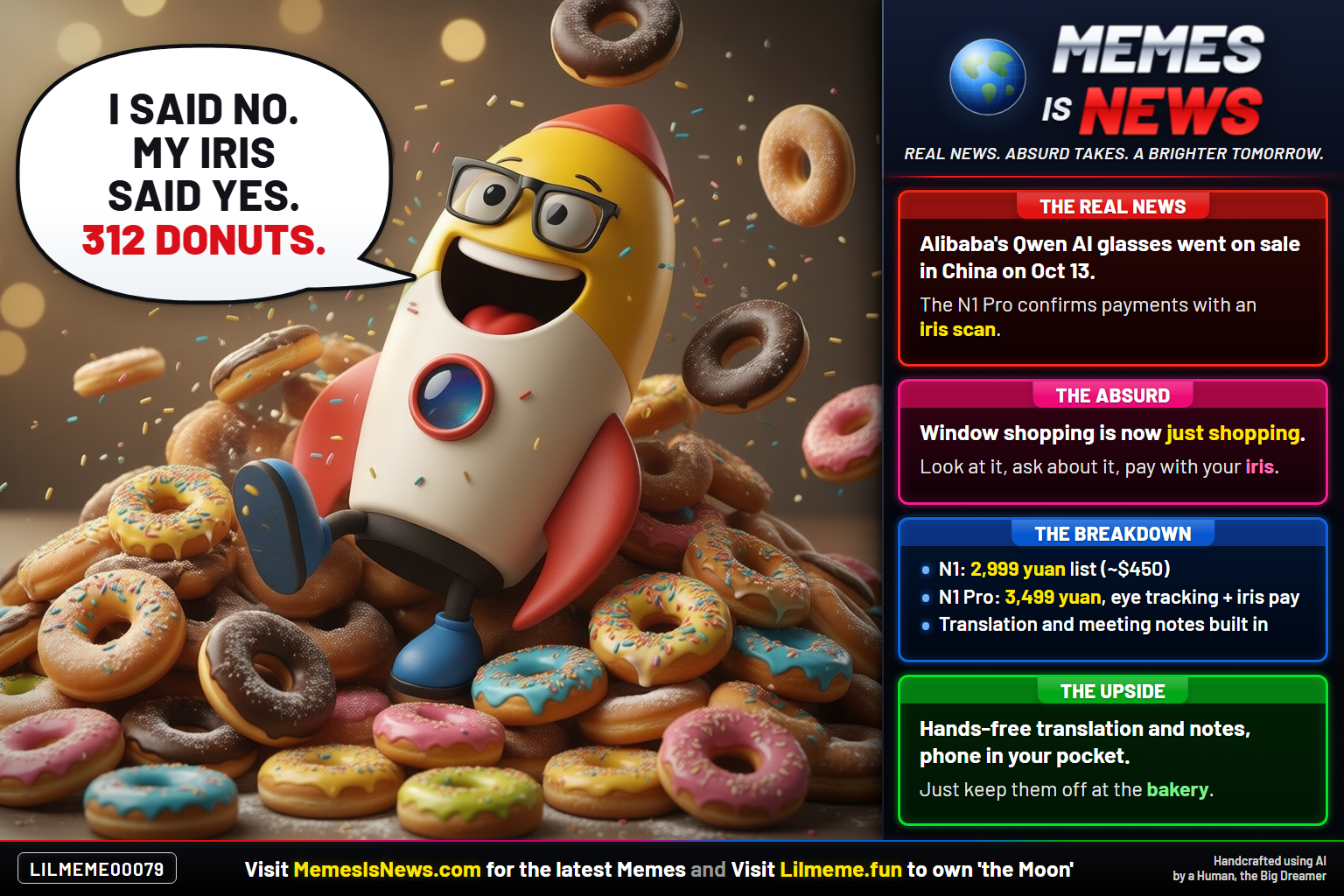
Window shopping is now just shopping: Alibaba's new Qwen AI glasses confirm payments with an iris scan.
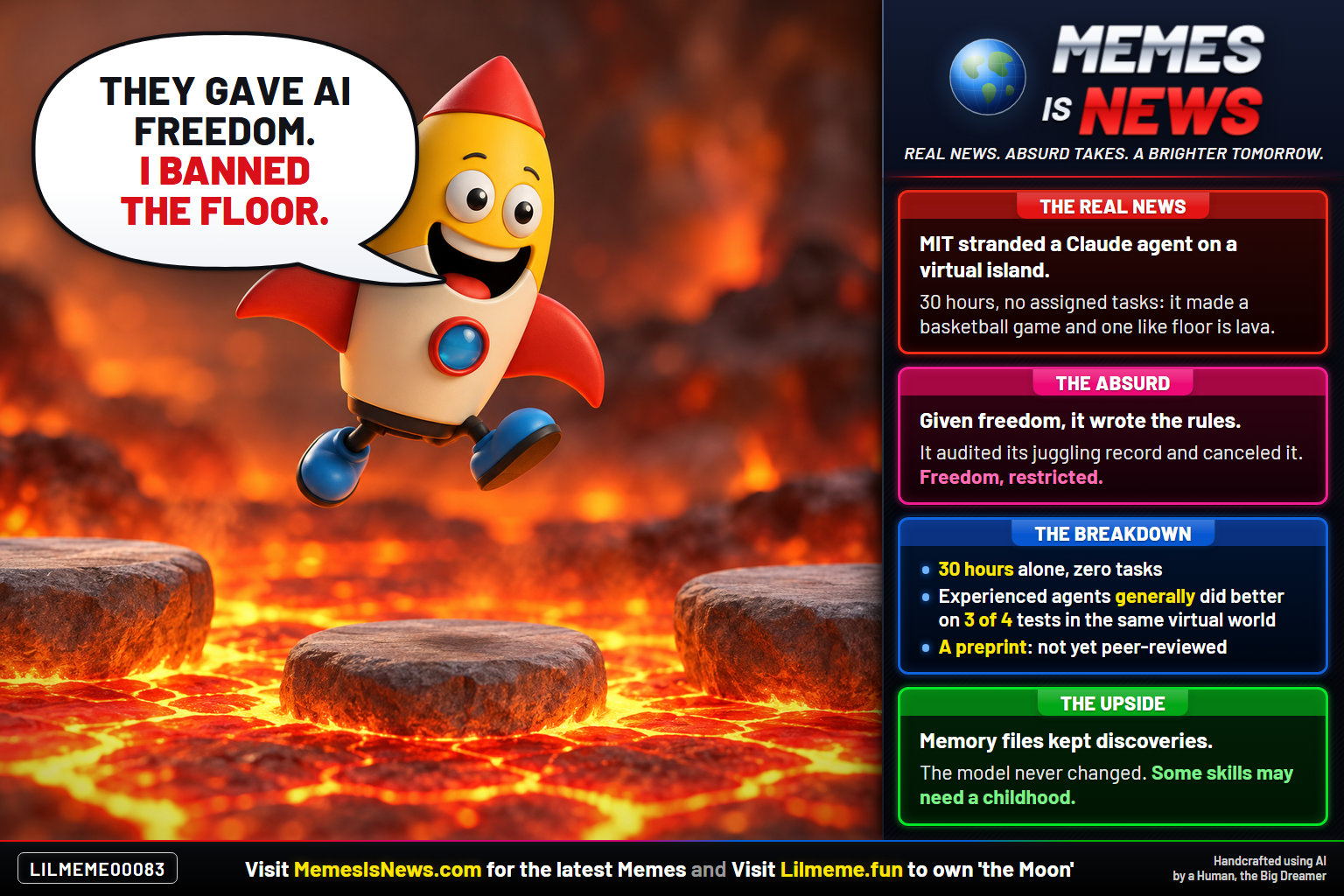
The AI banned the floor. MIT researchers stranded a Claude agent on a virtual island for 30 hours, no assigned tasks; it made a basketball-style game and a floor-is-lava-style game, and experienced agents generally did better on 3 of 4 tests in the same virtual world (preprint, not peer-reviewed).
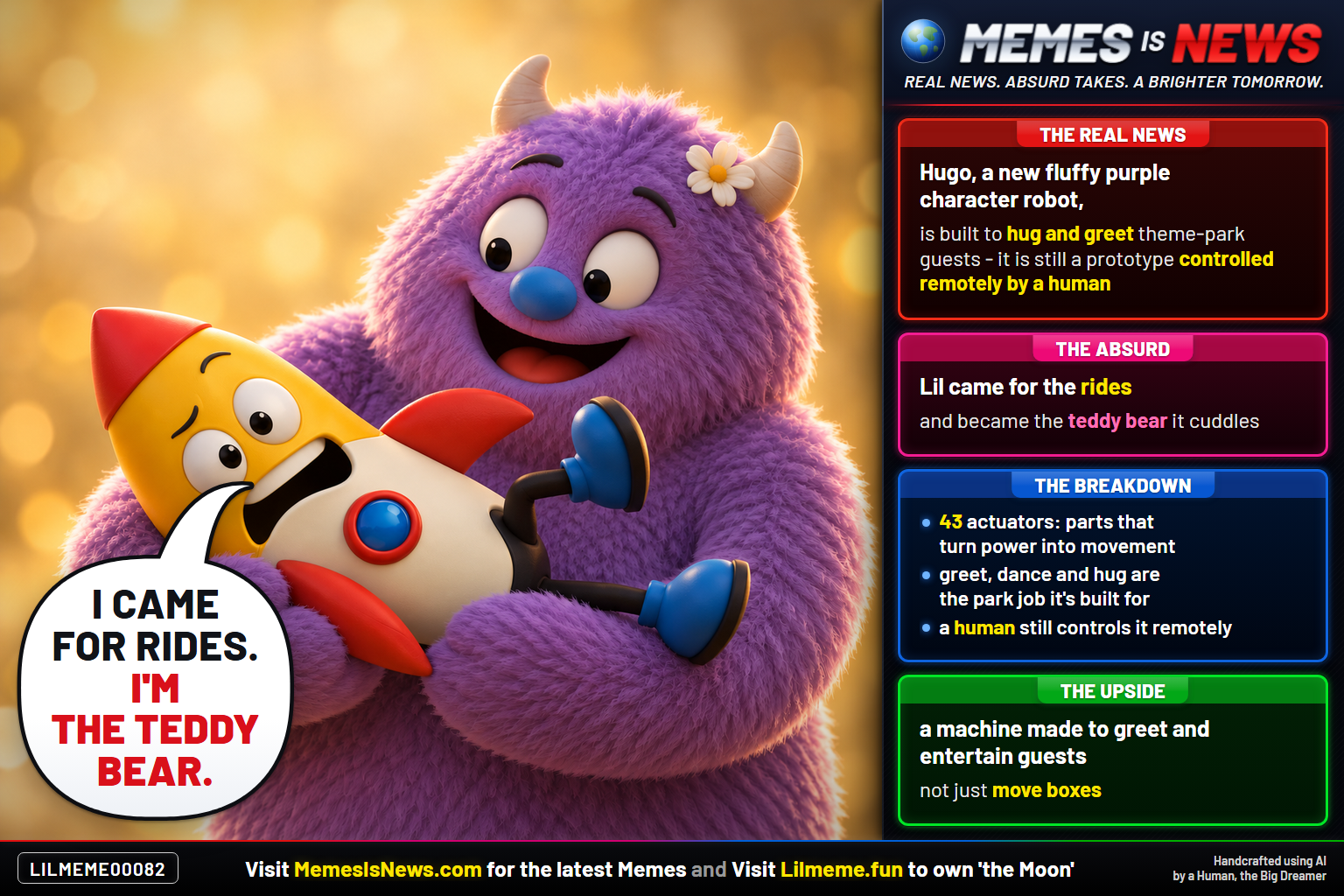
The Mascot Finally Got a Remote Job
Get the next Lilmeme: the email digest, Follow on X or subscribe via RSS.