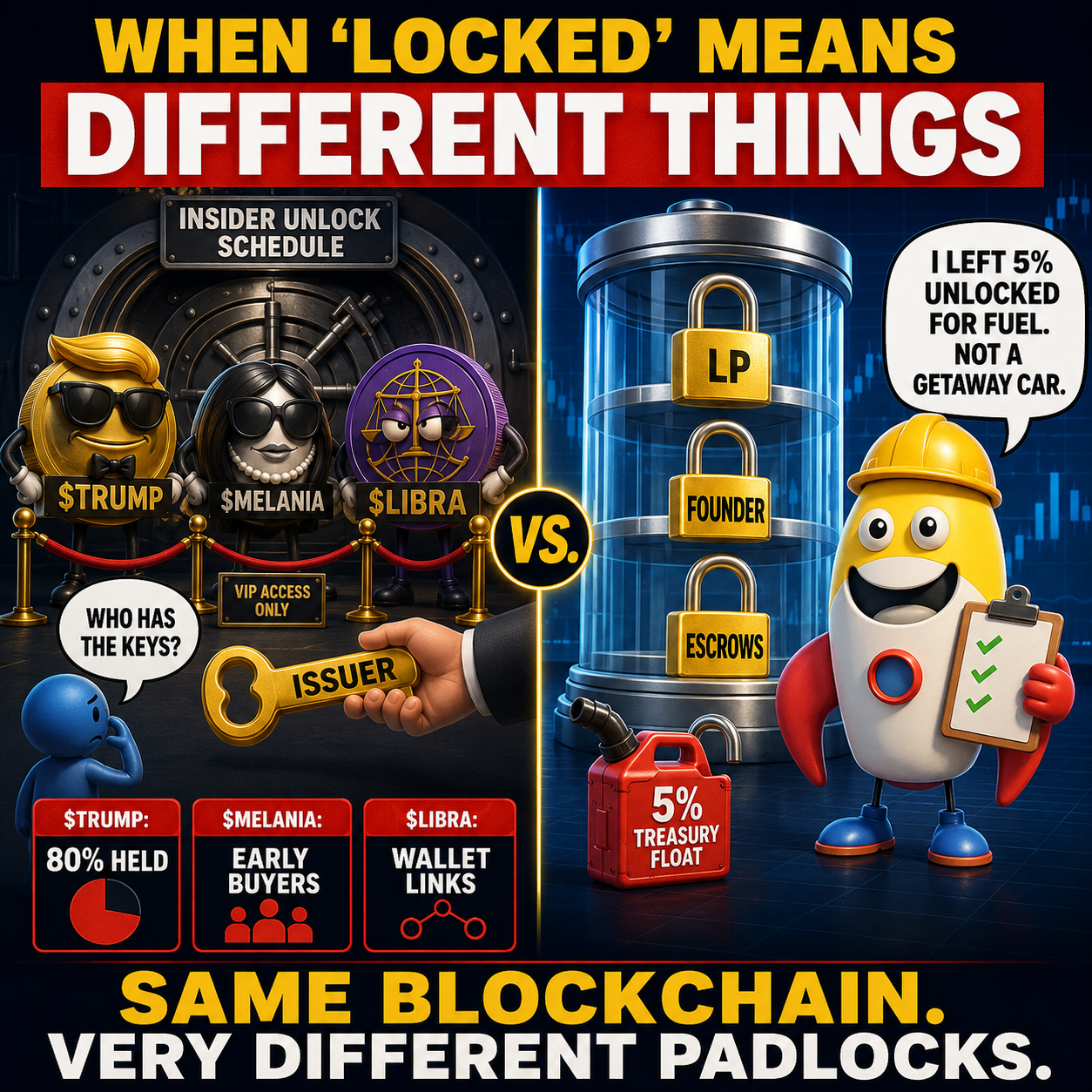
WHEN “LOCKED” MEANS DIFFERENT THINGS
Three tokens. Three very different padlocks. $TRUMP: on-chain analysis indicates Trump-linked entities held a large share of supply. $MELANIA: on-chain analysis identified early w...
Read the original caption
Three tokens. Three very different padlocks. $TRUMP: on-chain analysis indicates Trump-linked entities held a large share of supply. $MELANIA: on-chain analysis identified early wallets buying before the public announcement. $LIBRA: on-chain analysis linked wallets involved in the launch to the MELANIA token. Lil’meme: 95% of allocation locked across LP and vesting escrows; 5% treasury float. Same blockchain. Very different padlocks.
The real news
The story, straight
On this chain, the word 'locked' means three different things. On-chain analysis indicates Trump-linked entities held a large share of the $TRUMP supply.
On-chain analysis identified early $MELANIA wallets buying before the public announcement. And the $LIBRA launch wallets were linked to the MELANIA token.
For comparison, Lil'meme has 95% of its allocation locked across LP and vesting escrows, with a 5% treasury float.
The absurd
Why this is ridiculous
Same chain, same word, three different padlocks. On this chain, 'locked' is not a state of the token.
It is a state of the story.
The breakdown
How it breaks down
The audit of three tokens shows 'locked' is not one standard, it is three: a held share, an early buy, a linked wallet. The audit does not tell you which padlock is the real one.
It tells you each token gets to define the word.
The upside
Why it could matter
The lesson from this chain is simple: when a lock is the selling point, read the escrow, not the marketing. 95% locked in a verifiable escrow is a different word than 95% locked in a story.
Sources
Bubblemaps on-chain investigation of LIBRA, MELANIA, and linked wallets
One more Lilmeme?
Surprise me →
I bought a trampoline. Got a squat machine. BlackRock filed for a Bitcoin fund with capped gains.
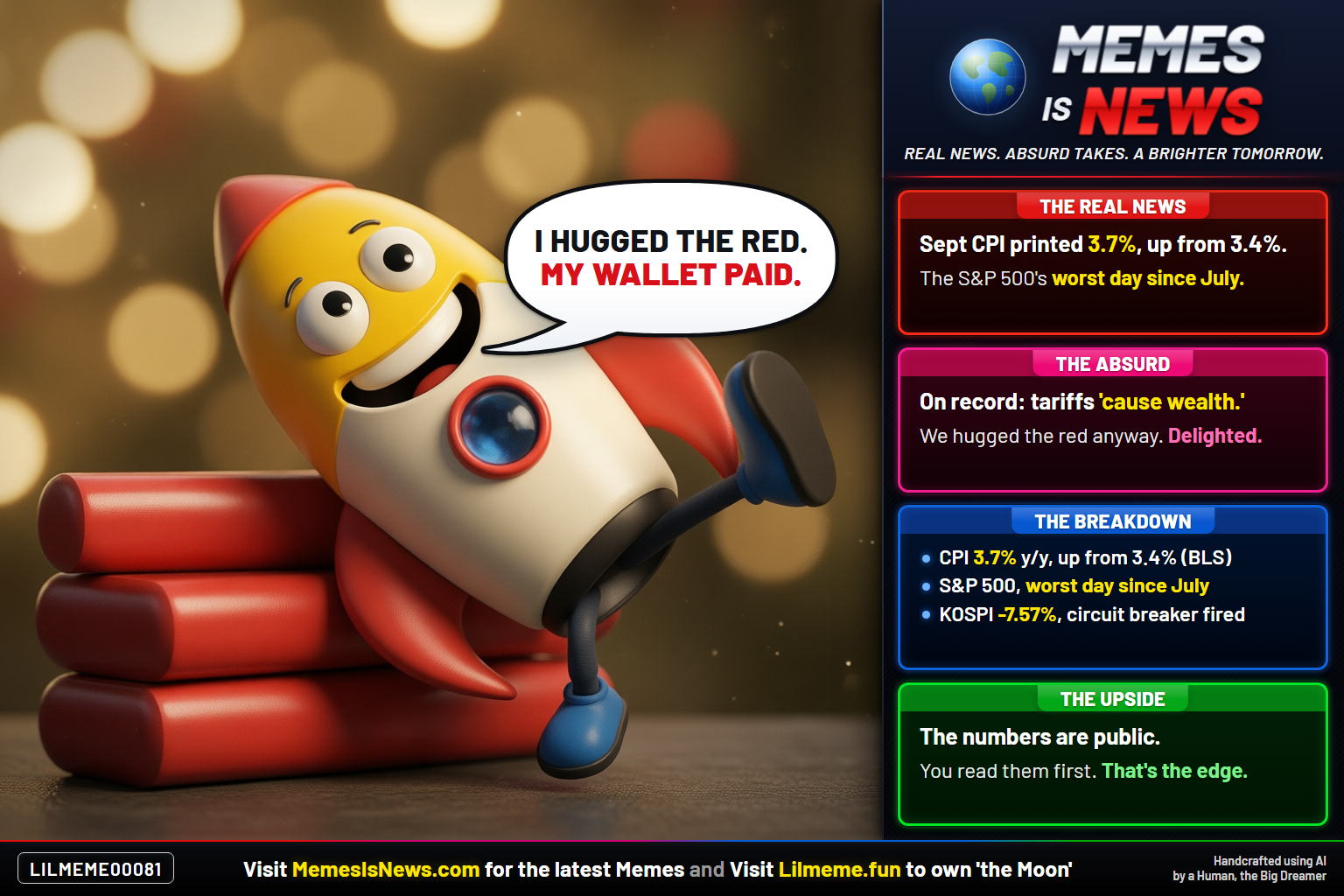
Inflation hit 3.7%, stocks posted their worst day since July, and on record the White House says tariffs 'cause wealth.' We hugged the red anyway.
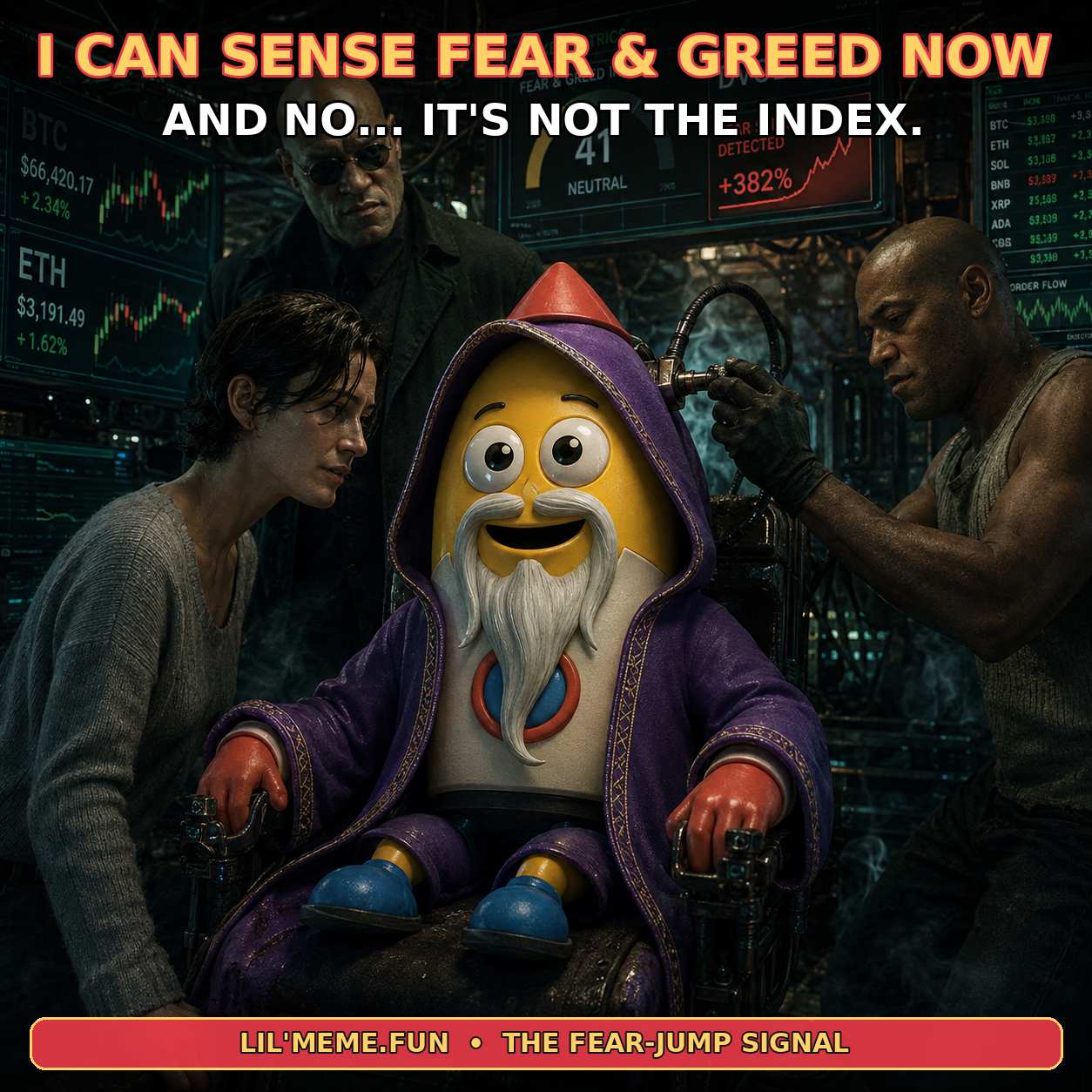
I can sense Fear & Greed now. And no — it’s not the index.
Get the next Lilmeme: the email digest, Follow on X or subscribe via RSS.