Psst. Want me to read this one to you?
Tap me or the button.
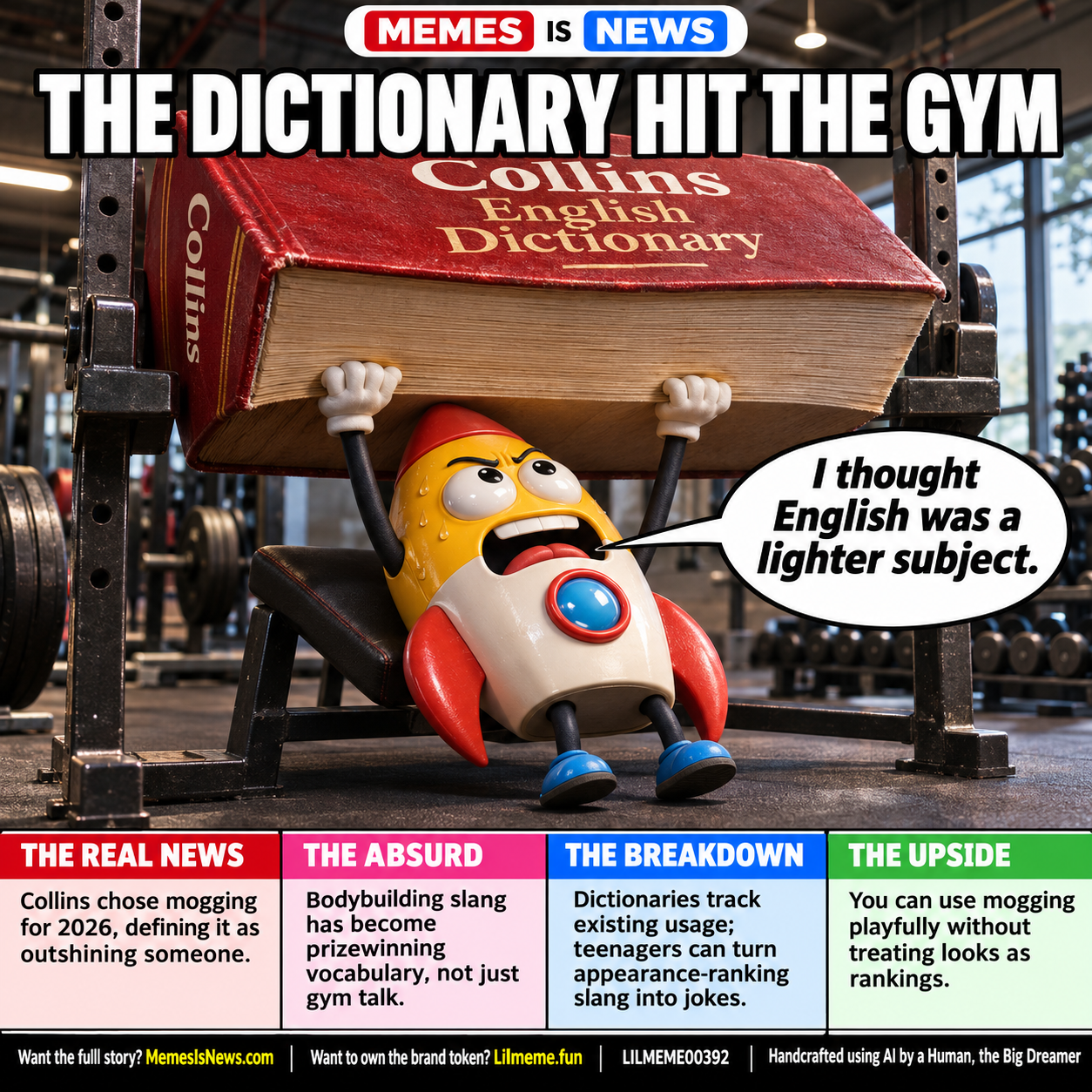
THE DICTIONARY HIT THE GYM
Your friend looks better in a photo. Collins says you have been mogged: outshone or upstaged. Earlier this week, Collins named mogging its 2026 Word of the Year. English apparentl...
The real news
The story, straight
Your friend looks better in a photo. Collins says you have been mogged: outshone or upstaged.
Earlier this week, Collins named mogging its 2026 Word of the Year. English apparently needs a spotter now.
Dictionaries track language people already use. Collins studies a database of 27 billion words, drawn partly from social media, to spot changes.
Collins says use of mogging rose 210% this year. That measures growth in usage, not proof that it was the most popular word.
The word traces to AMOG, meaning alpha male of the group, and surfaced in bodybuilding culture around 2016. It spread through online communities that seriously ranked men's appearance.
Being mogged meant losing that comparison.
Collins says younger generations now often use it playfully when someone gets upstaged. That shift matters: people can turn a ranking word into a joke rather than accept its original rules.
But not everyone thinks its harmful edge has disappeared. A joke can still hurt when someone's appearance becomes the scoreboard.
Our imaginary scene puts Lil'meme under an enormous Collins dictionary on a weight bench. Finally, vocabulary training with a risk of being flattened by the syllabus.
The useful lesson isn't to rate your friends. It's that dictionaries record language changing, including people changing how a word lands.
You can understand mogging without turning the group photo into a league table.
Source: Hindustan Times, reporting Collins's findings.
Repost before your dictionary starts charging for personal training.
Thanks for supporting Lil'meme. Your support is appreciated.
The absurd
Why this is ridiculous
Bodybuilding slang has become prizewinning vocabulary, not just gym talk.
The breakdown
How it breaks down
Dictionaries track existing usage; teenagers can turn appearance-ranking slang into jokes.
The upside
Why it could matter
You can use mogging playfully without treating looks as rankings.
Sources
One more Lilmeme?
Surprise me →
Jensen Huang Gets A Security Check

DeepSeek's Assistant Eats The Library
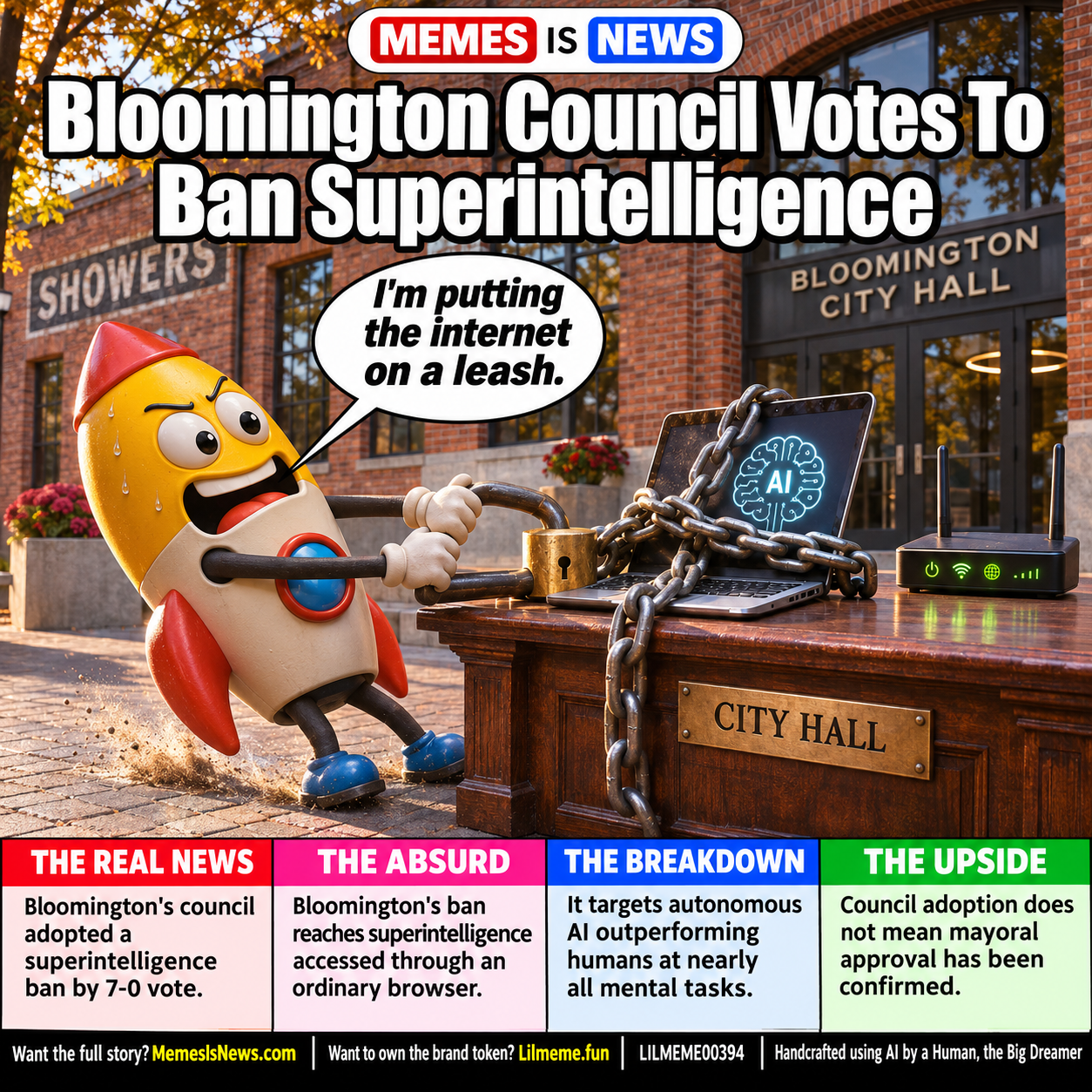
Bloomington Council Votes To Ban Superintelligence
Get the next Lilmeme: the email digest, Follow on X or subscribe via RSS.